

DIGITAL STORM weekly #25
All about AI, Future Trends, Digital Transformation for all which want to grow
Top news: AI discovers new class of antibiotics against MRSA
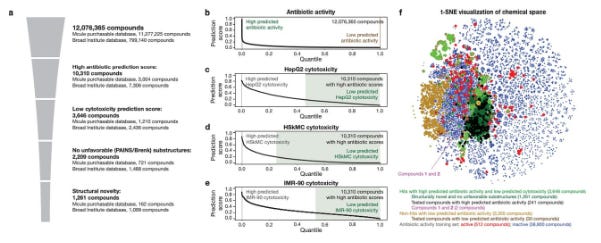
MIT researchers used AI to discover a class of antibiotics that kills MRSA cells.
The researchers trained AI models on data from over 39,000 chemical compounds screened for antibiotic activity against MRSA.
The models learned how effective new molecules could be against MRSA based on their chemical properties.
After screening over 12 million commercially available compounds, 280 were purchased and tested against MRSA cells.
Two promising compounds emerged, which killed MRSA bacteria by disrupting a process essential for many vital cell functions.
The compounds were tested on mouse models, reducing the MRSA population by a factor of 10 and showing significantly low toxicity towards human cells.
The researchers claim this is a significant breakthrough and suggest similar AI methods can be deployed to find new medicines for arthritis, cancer, etc.
What happened in 2023 in AI?
January: A massive $10 billion investment by Microsoft in OpenAI has raised eyebrows.
February: Meta has released Llama 2, an open-source alternative to the models developed by OpenAI.The premium edition of OpenAI's chatbot, ChatGPT Plus, has been unveiled. Introducing Bing Search, powered by AI, a new offering from Microsoft.
March: The powerful GPT-4 model, which is still regarded as the gold standard, is announced by OpenAI. The latest version from Midjourney, V5, is a giant leap forward for AI-powered picture generation. Copilot for Microsoft 365 is new from Microsoft. Launched by Google, Bard is a competitor to ChatGPT.
April: Elon Musk, Steve Wozniak, and over 1,100 other prominent figures have joined a petition demanding that high-capacity AI models stronger than GPT-4 not be trained anymore.
May: Security concerns have led Samsung and other companies to ban employees from using Gen AI tools. Web browsing features and ChatGPT plugins are released by OpenAI. Overnight, Nvidia's stock price surged 27%, bringing its market cap close to $1 trillion, driven by the surge in demand for graphics processing units (GPUs) used to train artificial intelligence models.
June: Adobe has unveiled Firefly, an advanced tool for creating images. Big news: Accenture is pouring $3 billion into artificial intelligence.
July: The code interpreter and data analysis features are now available in ChatGPT. The introduction of Gen AI coding tools causes a 50% decrease in Stack Overflow's traffic.
August: Hugging Face, a rival to OpenAI with a reported $4 billion valuation, is backed by Salesforce, according to reports. For companies, OpenAI has launched ChatGPT Enterprise.
September: Dall-E 3, a new and powerful tool for creating images, is released by OpenAI. Additionally, OpenAI introduces ChatGPT's multimodal capabilities. Meta, a messaging platform, smart glasses, and AI-powered image editor, among other things, releases AI chatbots.
October: Updated Pixel phones with Gen AI capabilities unveiled by Google. Retro app for the '90s Using AI, Epik has risen to the top of app charts. Baidu of China introduces ChatGPT competitor.
November: Grok, Elon Musk's alternative to ChatGPT, is launched. GPT-4 Turbo and Custom GPTs are announced by OpenAI. An AI wearable device called the Humane Ai Pin is introduced by former Apple employees. The H200 chips, announced by Nvidia, will drive the next AI generation. Sam Altman is dramatically fired and then rehired by OpenAI.
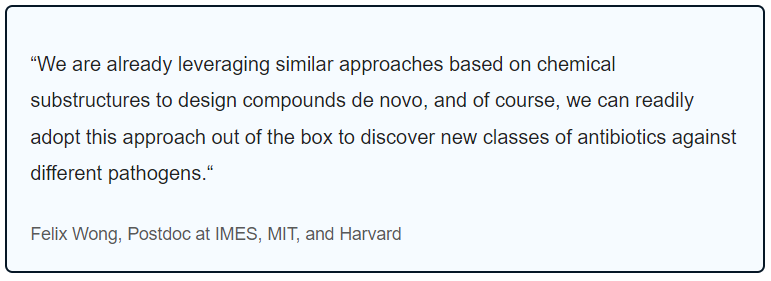
December: The debut of Pika 1.0 heralds a new age in artificial intelligence video generation from Pika Labs. Introducing Gemini, Google's AI model that can supposedly outperform GPT-4. With their V6 update, Midjourney elevates AI image generation. And Musavir.ai got launched a brand new text2picture generator with very easy user interface and astonishing results (see picture). At the bottom of this newsletter you can get some free tokens for Musavir.AI - dont forget to fill out a quick survey.
Amidst AI trends in Q4 2023, economic vigilance and geopolitical concerns shaped the agendas of CEOs.
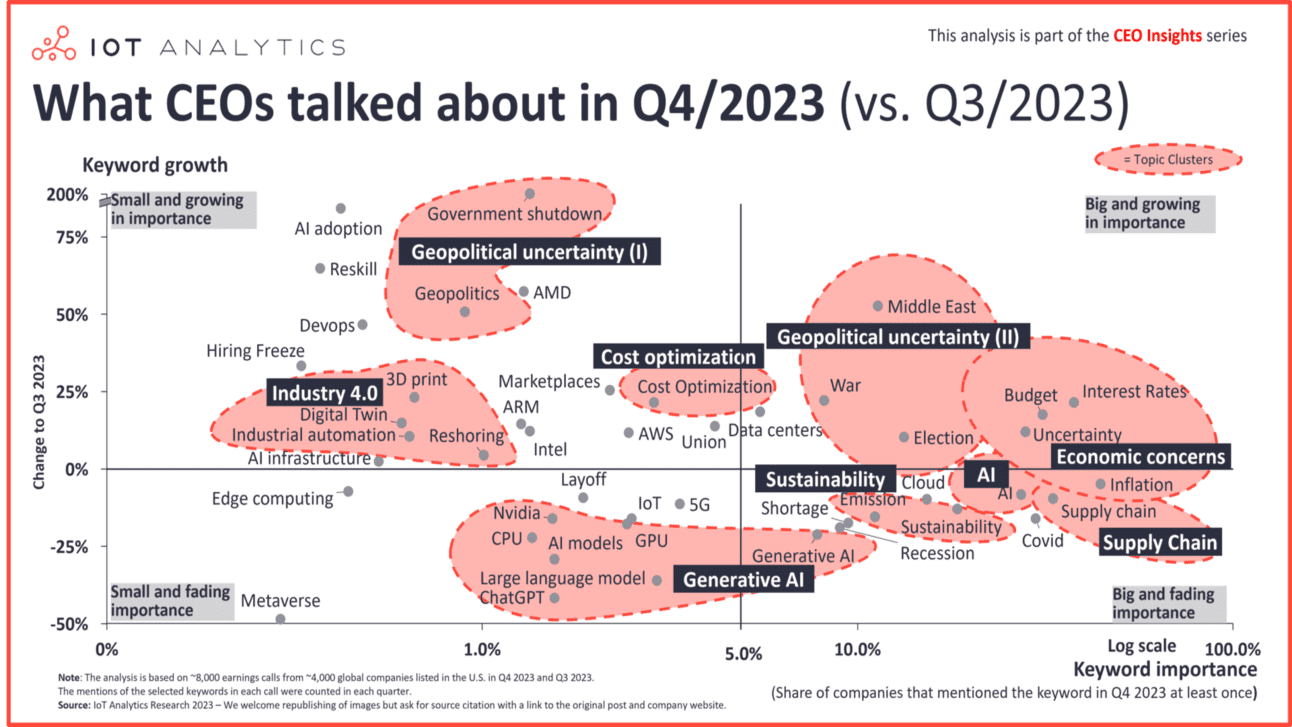
Interest rates and other economic issues took center stage.
Chief executive officer (CEO) budget and cost optimization initiatives gained momentum.
An important geopolitical issue was the ongoing conflict in the Middle East.
It was noticeable in the business discourse that generative AI was getting less and less mentions.
The CEO calls paid less attention to supply chain and sustainability issues.
Why important? Investments in artificial intelligence and sustainability, as well as strategies for the global market, could be affected by the cautious business climate that CEOs are expressing through their attention to geopolitical and economic concerns.
